
A Frustrating Problem Sacramento Homeowners Know Too Well
You press the button on your garage door remote, the door begins its descent, and then — just inches from the ground — it reverses direction and goes right back up. You try again. Same result. Maybe it works on the third attempt, maybe it doesn't. Either way, you're stuck wondering what went wrong and whether your garage is actually secure.
This is one of the most common garage door complaints we hear from homeowners across Sacramento, Elk Grove, and Roseville. The good news is that the cause is usually identifiable and fixable. The bad news is that ignoring it can lead to bigger, more expensive problems down the road.
Let's walk through the most likely reasons your garage door reverses before closing completely and what you can do about each one.
Understanding Your Garage Door's Safety Reversal System
Before diving into specific causes, it helps to understand why your garage door is designed to reverse in the first place. Federal law has required garage door openers manufactured after 1993 to include two safety mechanisms:
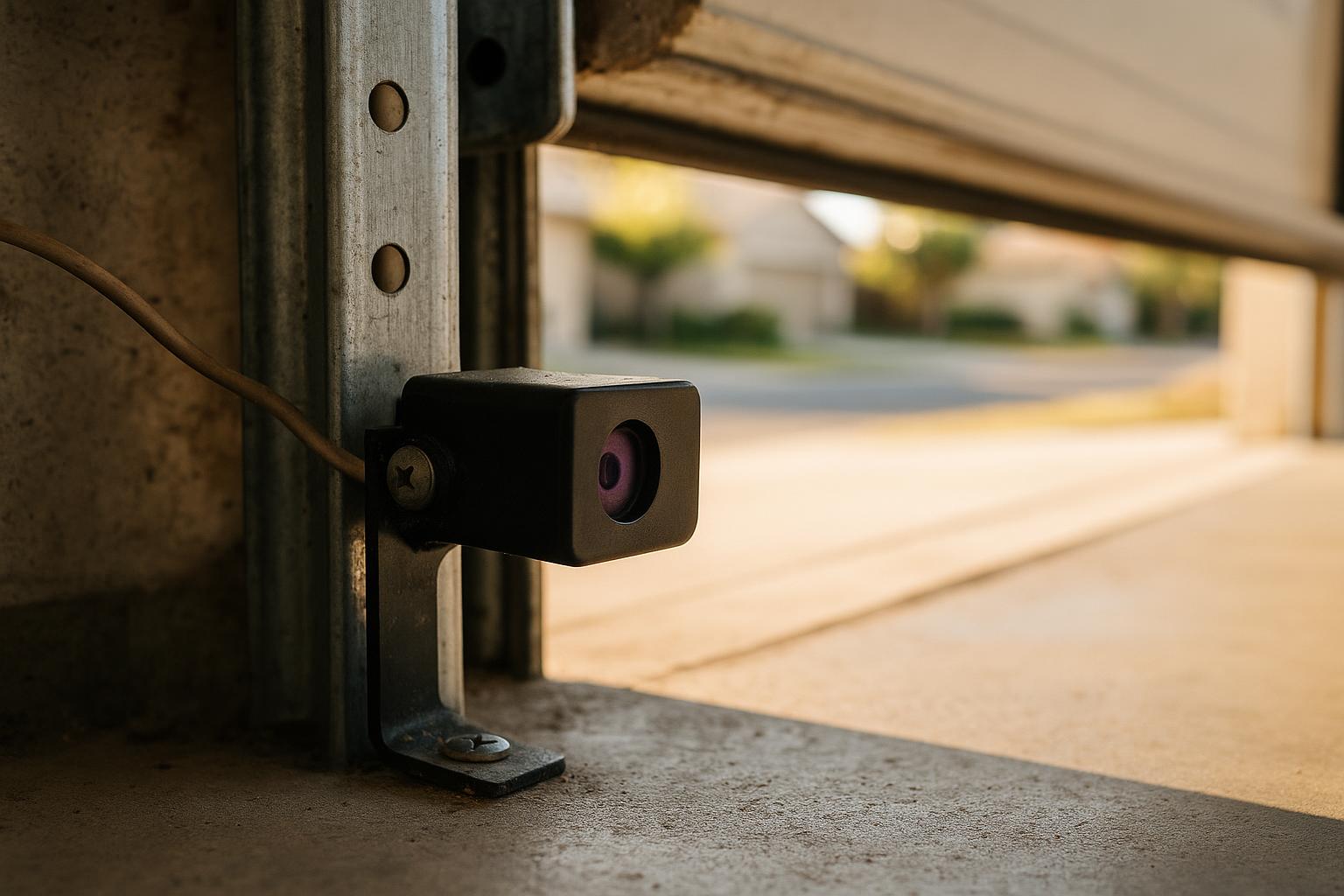
- Photo-eye sensors: These are the small sensors mounted near the bottom of your garage door tracks on either side. They project an invisible beam across the opening. If anything breaks that beam while the door is closing, the door automatically reverses.
- Auto-reverse mechanism: If the door encounters physical resistance while closing — like hitting an object or the floor with too much force — it reverses direction to prevent injury or damage.
Both of these systems exist to protect your family, pets, and property. When your door reverses unexpectedly, one of these systems is usually being triggered — sometimes for a legitimate reason and sometimes due to a malfunction.
Misaligned or Dirty Photo-Eye Sensors
This is the number one cause of garage doors that reverse before reaching the floor. The photo-eye sensors on either side of the door opening must be perfectly aligned with each other to maintain the infrared beam. If one sensor gets bumped, shifted, or knocked out of alignment, the system interprets the broken beam as an obstruction and reverses the door.
Sacramento homeowners should also check for dirt, dust, cobwebs, or moisture on the sensor lenses. Our dry summers kick up plenty of dust, and even a thin film on the lens can interfere with the beam.
What You Can Do
- Gently wipe both sensor lenses with a soft, dry cloth.
- Check that both sensor indicator lights are lit and steady. A blinking light usually means misalignment.
- Carefully adjust the sensors so they point directly at each other. They should be at the same height and angle.
If cleaning and adjusting the sensors doesn't solve the problem, the sensors themselves or their wiring may need to be replaced by a professional.
Incorrect Close-Force or Travel-Limit Settings
Your garage door opener has adjustable settings that control how far the door travels and how much force it uses to close. If the close-limit setting is off, the opener may think the door has reached the floor before it actually has, or it may interpret normal contact with the ground as an obstruction and trigger the auto-reverse.
Similarly, if the close-force setting is too low, the door won't push through even minor resistance — like a slightly uneven garage floor or weather stripping — and will reverse instead.
What You Can Do
Most openers have adjustment screws or dials on the back or side of the motor unit labeled for travel limits and force. Your owner's manual will explain how to make small adjustments. However, we recommend being cautious here. Setting the force too high can create a safety hazard, and incorrect travel limits can damage the door or opener. If you're unsure, it's best to call a technician.
Worn or Broken Garage Door Springs
Your garage door springs do the heavy lifting — literally. They counterbalance the weight of the door so the opener doesn't have to work as hard. When springs wear out or break, the door becomes significantly heavier for the opener to manage. The opener may struggle to control the door's descent, and the increased resistance can trigger the auto-reverse mechanism.
Spring issues are especially common in the Sacramento region where temperature swings between hot summers and cooler winters cause metal fatigue over time. If your springs are more than seven to ten years old, they may be nearing the end of their lifespan.
What You Can Do
Do not attempt to repair or replace garage door springs yourself. These components are under extreme tension and can cause serious injury if handled improperly. Spring replacement should always be performed by an experienced garage door technician.
Damaged or Obstructed Tracks
The metal tracks that guide your garage door up and down need to be clean, properly aligned, and free of dents or bends. If a track is damaged or if debris has accumulated inside it, the door can bind or stick during operation. When the opener senses this resistance, it reverses the door as a safety precaution.
What You Can Do
- Visually inspect both tracks for dents, bends, or gaps.
- Remove any visible debris like leaves, dirt, or small objects.
- Check that the tracks are securely fastened to the wall and haven't shifted.
Minor debris removal is a safe DIY task, but bent or misaligned tracks should be repaired by a professional to avoid further damage to the door system.
Worn Rollers or Hinges
Over time, the rollers that move along the tracks and the hinges that connect the door panels can wear out. Worn rollers create friction, and damaged hinges can cause the door panels to bind or move unevenly. Both issues increase the resistance the opener encounters, potentially triggering a reversal.
If you hear grinding, scraping, or squealing noises when the door operates, worn rollers or hinges are a likely culprit.
Wiring or Logic Board Issues
In some cases, the problem isn't mechanical at all. Frayed wires between the sensors and the opener, corroded connections, or a failing logic board inside the opener unit can send false signals that cause the door to reverse. Electrical issues like these are more common in older openers and can be tricky to diagnose without the right tools and experience.
When to Call a Professional
Some of the fixes above — cleaning sensors, removing track debris, and checking alignment — are reasonable for handy homeowners to tackle. But if those simple steps don't resolve the issue, or if you suspect problems with springs, wiring, or the opener itself, it's time to call in a professional.
At Precision Garage Door of Sacramento, we diagnose reversal issues every week for homeowners in Folsom, Citrus Heights, Rancho Cordova, and throughout the greater Sacramento area. Our technicians arrive on time, explain exactly what's causing the problem, and fix it right the first time — so you're not left guessing whether your garage is secure tonight.
Don't Ignore a Reversing Garage Door
A garage door that won't close properly isn't just an inconvenience — it's a security risk and a potential safety hazard. An open or partially closed garage door invites theft, pests, and weather damage. And a malfunctioning safety system could eventually fail in a way that causes the door to not reverse when it should.
If your garage door has been reversing before it reaches the floor, take a few minutes to check the sensors and tracks. If the problem persists, give us a call. We'll get your door working reliably again so you can stop pressing that button three times and hoping for the best.