
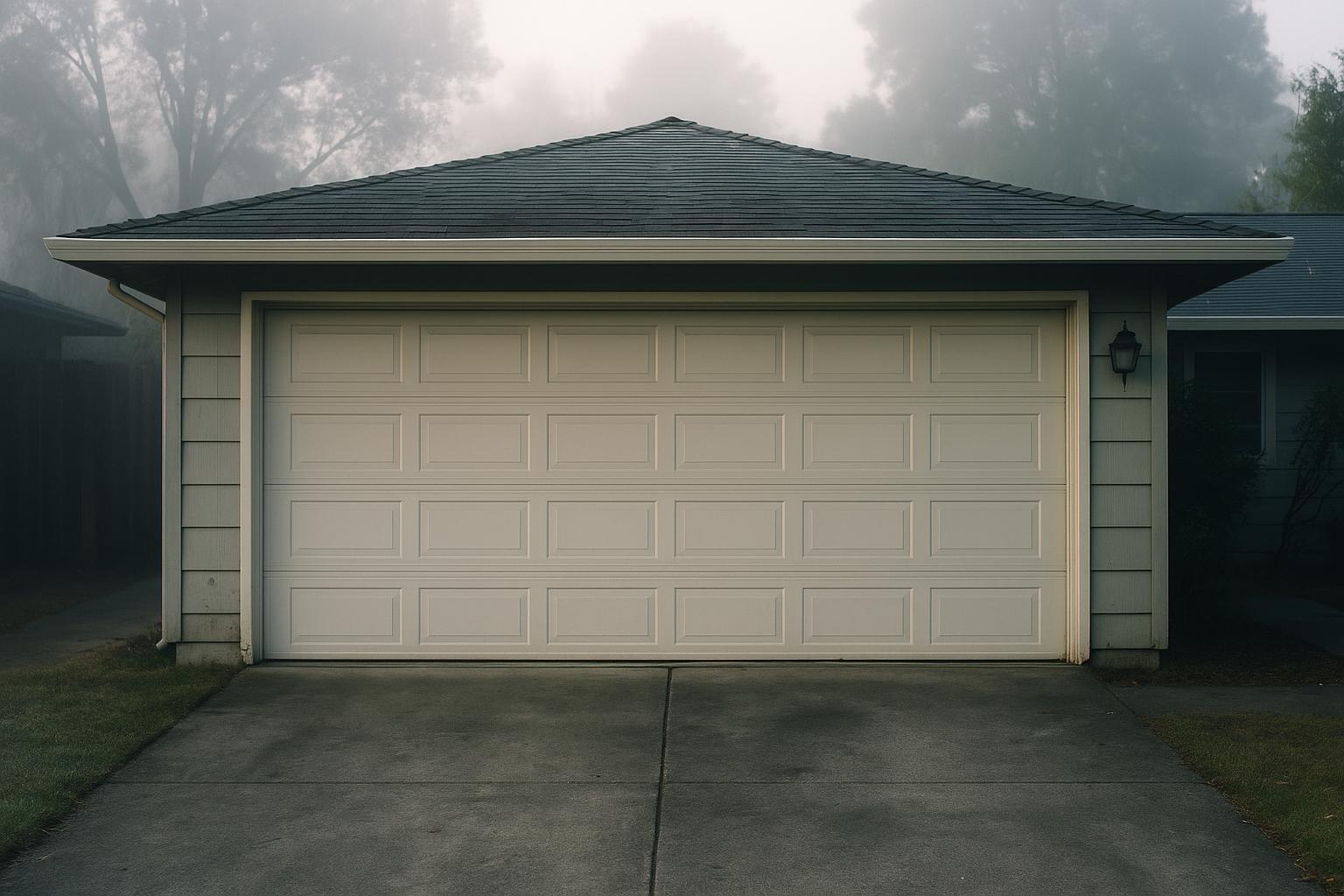
You're Running Late and Your Garage Door Won't Budge
It's 7:15 a.m. You've got coffee in one hand, your bag in the other, and you're already mentally on the freeway. You press the garage door opener button and… nothing. Or maybe it groans, moves an inch, and stops. Few things are more frustrating than a garage door that won't open when you need it most.
This is one of the most common calls we get at Precision Garage Door of Sacramento, and it happens more often in the early morning hours than you might expect. The good news is that most causes are straightforward and fixable. Let's walk through the most likely reasons your garage door is refusing to cooperate and what you should do next.
Cold Mornings and Temperature Swings
Sacramento is known for warm summers, but mornings — especially in fall, winter, and early spring — can be surprisingly cold. Overnight temperatures in the 30s and 40s can affect your garage door system in a few ways.
- Lubricant thickens: The grease on your springs, rollers, and tracks can become stiff in cold temperatures, making the door harder to move. This puts extra strain on the opener motor.
- Metal contracts: Steel tracks and springs contract slightly in the cold, which can increase friction and throw off the door's balance.
- Weather seal sticks: The rubber weather seal along the bottom of the door can freeze or stick to the garage floor on cold mornings, especially if there's moisture present.
If your door seems sluggish only on cold mornings but works fine later in the day, temperature is likely playing a role. Applying a silicone-based lubricant to the springs, rollers, and hinges can help. Avoid using WD-40 as a long-term solution — it's a solvent, not a true lubricant.
Dead Batteries in the Remote or Wall Button
It sounds almost too simple, but dead batteries are one of the top reasons a garage door won't respond in the morning. Remote transmitter batteries typically last one to two years, and they tend to die gradually. You might notice the range getting shorter — having to stand closer to the door for it to respond — before they fail completely.
Try these quick checks:
- Replace the batteries in your remote with fresh ones.
- Test the wall-mounted button inside the garage. If the door opens from the wall button but not the remote, the remote or its batteries are the issue.
- If neither the remote nor the wall button works, check that the opener unit is plugged in and that the outlet has power. A tripped breaker or GFCI outlet is more common than you'd think.
The Disconnect Switch Was Engaged
Every garage door opener has a manual disconnect — usually a red cord or handle hanging from the opener rail. This is designed to let you open the door manually during a power outage. If someone pulled it accidentally, or if it was used during a recent outage and never re-engaged, the opener motor will run but the door won't move.
To fix this, simply pull the cord back toward the opener unit and try operating the door with the remote or wall button. The trolley should re-engage with a click.
Broken Springs
If you hear a loud bang from the garage overnight or your door lifts only a few inches before stopping, there's a strong chance a torsion spring has broken. Springs are under extreme tension and do most of the heavy lifting — literally. When one snaps, the opener motor alone doesn't have enough power to raise the door.
Do not attempt to open the door manually or repair the spring yourself. Garage door springs are one of the most dangerous components in your home. A broken spring repair should always be handled by a trained technician. If you're in Sacramento, Elk Grove, Folsom, Roseville, or the surrounding area, our team can typically get to you the same day.
Misaligned or Blocked Safety Sensors
Modern garage door openers are equipped with photoelectric safety sensors mounted near the floor on either side of the door. If these sensors are misaligned, dirty, or blocked by something — a trash can, a bike tire, a cobweb — the door may refuse to close or, in some cases, won't operate at all.
Check for these issues:
- Make sure both sensor lights are lit and steady (typically one green, one amber).
- Wipe the sensor lenses with a clean cloth.
- Ensure nothing is blocking the invisible beam between the two sensors.
- Check that the sensor brackets haven't been bumped or shifted.
If the lights are blinking or one is off entirely, the sensors may need to be realigned or the wiring may need attention.
Worn Gears Inside the Opener
If your garage door opener hums or runs but the door doesn't move, the internal gears may be stripped. This is especially common in older chain-drive openers that have been in service for 10 or more years. The nylon drive gear inside the motor housing wears down over time and eventually fails to transfer power to the drive chain or belt.
A gear replacement is a relatively affordable repair compared to replacing the entire opener, but it does require disassembling the motor unit. This is a job best left to a professional to ensure the opener is reassembled correctly and safely.
When to Call a Professional
Some morning garage door problems are easy DIY fixes — swapping batteries, clearing sensor obstructions, or re-engaging the disconnect cord. But others require professional tools and expertise. You should call a garage door technician if:
- A spring is visibly broken or the door feels extremely heavy when lifted manually.
- The door is off its tracks or hanging at an angle.
- The opener motor runs but the door doesn't move, even after checking the disconnect.
- You smell burning or see sparks from the opener unit.
- The door has been malfunctioning repeatedly despite basic troubleshooting.
At Precision Garage Door of Sacramento, we serve homeowners across Sacramento, Rancho Cordova, Citrus Heights, and the surrounding communities. We show up on time, explain exactly what's wrong, and give you honest options — no pressure, no upselling.
Prevent Tomorrow Morning's Problem Today
The best way to avoid getting stuck in your garage on a busy morning is regular maintenance. An annual garage door tune-up includes lubricating moving parts, testing the balance and safety features, tightening hardware, and inspecting springs and cables for wear. It's a small investment that prevents big surprises.
If your garage door gave you trouble this morning — or if it's been acting up and you've been putting off the call — reach out to our team. We'll get it diagnosed and fixed so you can get back to your routine without worrying about what's waiting for you in the garage.