
What Another Season of Ignoring This Actually Costs
If your garage shares a wall with the living space — laundry room, kitchen, bonus room above it — a leaky garage door isn't just a garage problem. It's a house problem. Every month you put off fixing the seals, you're paying your HVAC system to fight air that's leaking in or out through a 16-foot gap most people never think about. One more winter of rain-driven drafts, one more summer of heat soaking through a thin, gapped door, and that's real money gone, not hypothetical money. This is the kind of thing worth settling with facts instead of guessing who's right.
Why an Attached Garage Affects the Whole House
An attached garage is basically a buffer zone. On a well-sealed door, that buffer does its job — it absorbs temperature swings before they reach your living space. On a leaky one, the garage stops being a buffer and starts being an extension of the outdoors. Hot inland air in summer, cold damp air in winter, dust and wildfire smoke during dry season — all of it pushes through gaps and settles into a space that's often connected to interior rooms by a shared wall, a door, or ductwork running through the garage ceiling.
If your water heater, furnace, or ductwork lives in the garage — common in a lot of Sacramento-area homes — a leaky door makes your HVAC system work harder just to heat the air around its own equipment, let alone the house.
Where the Leaks Actually Are
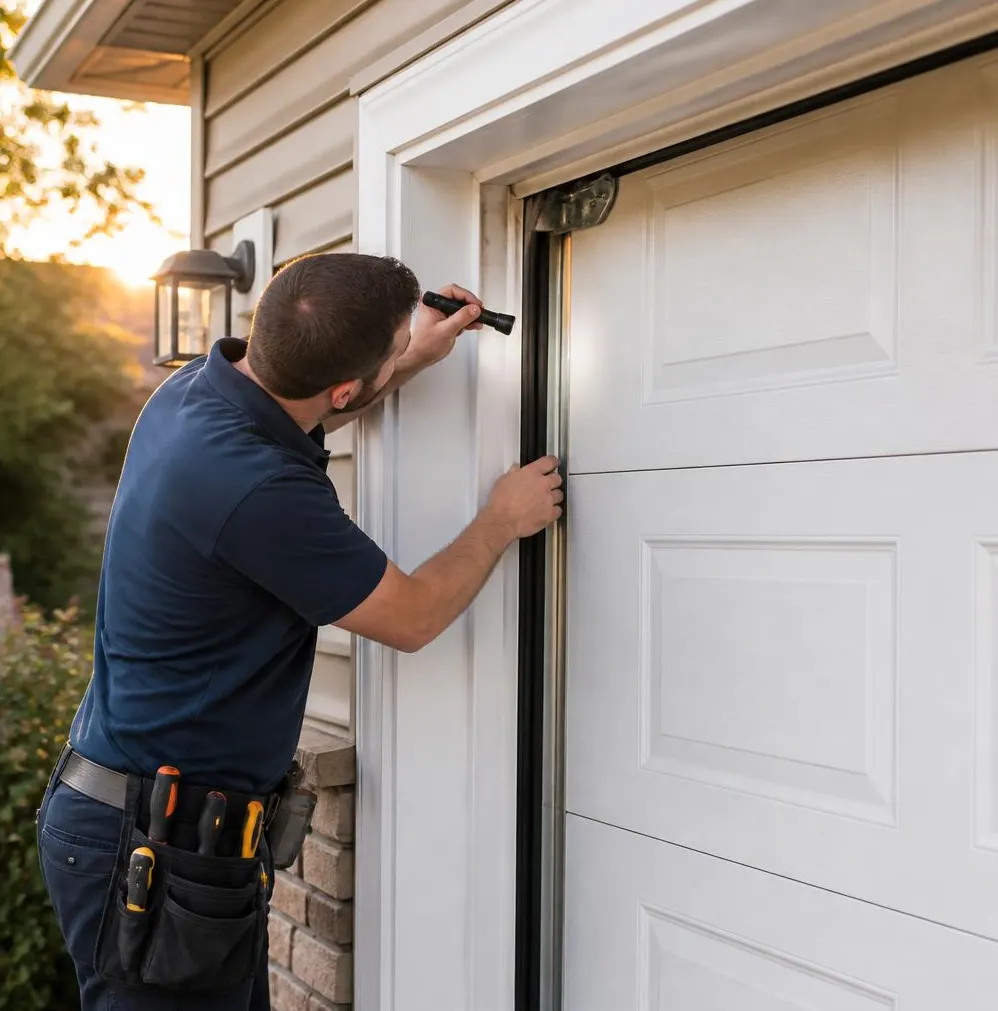
Nobody argues about a hole they can see. The disagreement usually happens because the leaks are small and spread out. Check these:
- Bottom seal (the rubber strip along the floor): cracked, flattened, or torn from years of sun and grit. This is the single biggest gap on most doors.
- Side and top weatherstripping: brittle, pulling away from the frame, or missing in sections.
- Panel seams: on older steel doors, warped or dented panels no longer sit flush, leaving thin gaps you can feel air through on a windy day.
- The door itself: a single-layer, non-insulated door transfers heat directly. Even with perfect seals, an uninsulated steel slab lets outdoor temperatures soak through into the garage, and from there into anything that shares a wall with it.
- Where the door meets the slab: settling or an uneven floor can leave a gap along the bottom that no amount of weatherstripping adjustment will fix.
How to Prove It, Not Just Argue About It
You don't need special equipment for a basic test:
- The daylight test: close the door, turn off the garage lights, and look for light coming through around the edges or bottom. Any visible light is a gap air moves through too.
- The dollar-bill test: close the door on a dollar bill at a few points along the bottom seal. If it pulls out easily, the seal isn't compressing enough to block air.
- The hand test: on a breezy day, run your hand slowly along the inside edges of the closed door. Cold or hot air movement means a gap, even a small one.
- Check the garage temperature: if the garage runs noticeably hotter or colder than it should relative to outside, and it's not from the slab itself, the door is likely letting conditioned complaints — or outdoor extremes — through.
What Actually Fixes It (And What Doesn't)
Replacing worn weatherstripping and the bottom seal is cheap, usually a same-day fix, and solves a surprising amount of the problem on its own. If the door is otherwise in good shape — tracks straight, panels not warped, springs balanced — new seals alone can noticeably cut the draft.
Where it gets more involved: if the door itself is a thin, non-insulated panel, seals only solve the air-leak half of the equation. The other half is heat transfer straight through the material, which seals can't touch. That's a case where an insulated replacement door pays for itself over time, especially on a garage that takes direct summer sun or sits exposed to winter rain and wind.
What doesn't help: foam tape slapped over old, cracked weatherstripping without replacing it, or ignoring a door that's visibly sagging or no longer closing flush. Those are temporary patches on a problem that keeps getting worse.
When to Call Precision Garage Door of Sacramento
If the daylight test, the dollar-bill test, or just common sense tells you air is getting past your door, it's worth having it looked at properly rather than guessing with foam strips from the hardware store. Our Garage Door Maintenance service includes checking seals, weatherstripping, and panel alignment, and replacing what's worn so the door actually closes flush and tight. If the door itself is old, thin, or damaged beyond a seal fix, we'll walk you through Garage Door Installation options, including insulated doors built for the heat swings and winter rain this area sees, and explain the real trade-offs so you're not guessing at that decision either.
If you're in Sacramento, Elk Grove, Rancho Cordova, Citrus Heights, Folsom, Roseville, West Sacramento, or Carmichael and want a straight answer on what your garage door is costing you in comfort and energy, call Precision Garage Door of Sacramento. We'll check it, explain exactly what's going on, and fix it right the first time.