
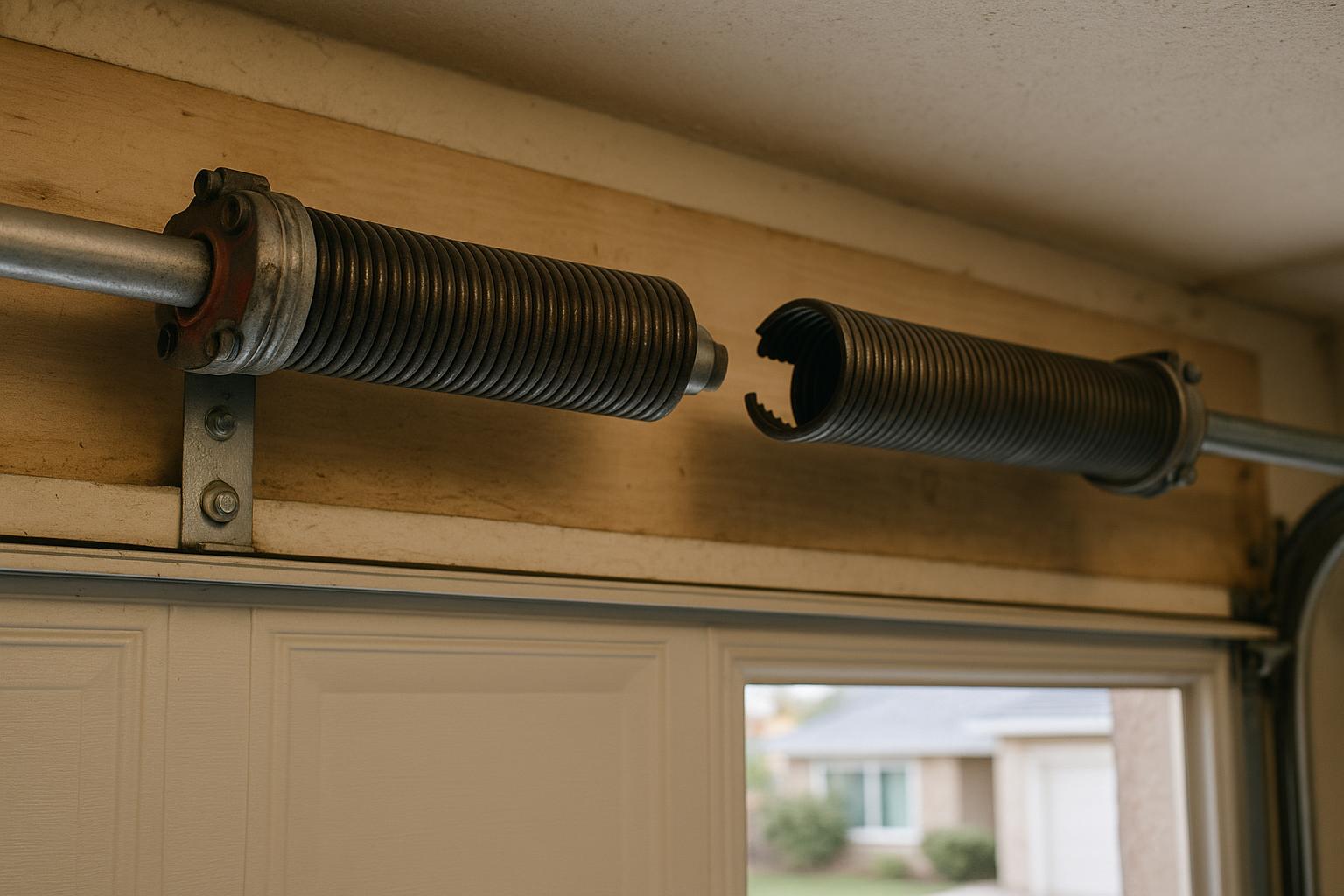
One Spring Broke — Do You Really Need to Replace Both?
It usually happens without warning. You press the button to open your garage door, and instead of the smooth lift you're used to, you hear a loud bang followed by a door that barely moves — or won't move at all. You've got a broken garage door spring.
Once the initial shock wears off, the next question most Sacramento homeowners ask is a practical one: Do I need to replace both springs, or just the broken one?
It's a fair question, especially when you're trying to be smart with your money. But the answer might surprise you. In almost every case, replacing both springs at the same time is the better choice. Here's why.
How Garage Door Springs Work Together
Most residential garage doors in the Sacramento area use a pair of torsion springs mounted on a metal shaft above the door. These springs work together to counterbalance the weight of the door, which can range from 130 to over 400 pounds depending on the material and size.
When both springs are in good condition, they share the load evenly. Each spring handles roughly half the door's weight, making it easy for your opener to lift and lower the door smoothly. When one spring breaks, the other is left carrying the entire load — something it was never designed to do.
Why Replacing Just One Spring Is Risky
On the surface, replacing only the broken spring seems like the budget-friendly move. But here's the problem: if both springs were installed at the same time, they've endured the same number of cycles and the same amount of wear. When one fails, the other is almost certainly nearing the end of its life too.
Here's what can happen if you replace only the broken spring:
- The second spring breaks within weeks or months. You'll end up paying for another service call, more labor, and the inconvenience of being stuck with a non-functioning garage door again.
- Uneven tension causes problems. A brand-new spring paired with a worn spring creates an imbalance. This puts extra stress on your garage door opener, cables, and the door itself, potentially leading to additional repairs.
- Your door may not track properly. Uneven spring tension can cause the door to rise unevenly, putting strain on the tracks and rollers. Over time, this can warp the door or cause it to bind.
The Cost Argument Actually Favors Replacing Both
When a technician is already at your home with the tools and parts to replace one spring, adding the second spring is significantly cheaper than scheduling a separate visit later. The labor involved in replacing garage door springs is the biggest portion of the cost — the springs themselves are relatively affordable.
Think of it this way: if you replace one spring now and the other breaks in three months, you'll pay for two service calls, two rounds of labor, and two disruptions to your schedule. Replacing both at once means one visit, one labor charge, and peace of mind that both springs will last for years to come.
How Long Should New Springs Last in Sacramento?
Standard torsion springs are rated for approximately 10,000 cycles, with one cycle being a single open-and-close of the door. For the average household that uses the garage door three to four times a day, that works out to roughly seven to ten years.
Sacramento's hot summers can affect spring longevity slightly, as metal expands and contracts with temperature swings. However, the biggest factor is simply how often you use your door. Families that use the garage as their primary entrance may go through springs faster than those who rarely open the door.
If you want springs that last even longer, ask your technician about high-cycle springs. These are rated for 25,000 or even 50,000 cycles and are a smart investment for homeowners who plan to stay in their home long-term.
Can You Replace Garage Door Springs Yourself?
This is one of those home repairs where the DIY approach is genuinely dangerous. Garage door springs are under extreme tension — enough force to cause serious injury or even death if they're handled improperly. Every year, emergency rooms across the country treat injuries caused by amateur spring replacement attempts.
Professional garage door technicians have the specialized tools, training, and experience to replace springs safely. They'll also make sure the springs are properly calibrated to your specific door's weight, which is critical for smooth operation and the longevity of your opener.
What to Do When a Spring Breaks
- Don't try to open the door. Using your opener with a broken spring can damage the opener and the door.
- Disconnect the opener. Pull the emergency release cord to disconnect the door from the opener.
- Call a professional. A qualified technician can usually complete the repair the same day.
- Ask about replacing both springs. If your technician doesn't bring it up, ask. A reputable company will give you an honest recommendation.
What to Expect During a Spring Replacement
When you call for spring replacement service in the Sacramento area, here's what a typical appointment looks like:
- The technician inspects the broken spring and evaluates the condition of the second spring, cables, and hardware.
- They recommend replacing both springs and explain the reasoning.
- Old springs are carefully removed and new ones are installed on the torsion shaft.
- The springs are wound to the precise tension needed for your door's weight.
- The technician tests the door's balance, checks the opener, and lubricates moving parts.
- The entire process typically takes about an hour.
The Bottom Line
When one garage door spring breaks, replacing both is almost always the smarter, safer, and more cost-effective decision. You'll avoid the hassle of a second breakdown, protect your opener and door from uneven stress, and get the longest possible life out of your new springs.
If you're dealing with a broken spring at your home in Sacramento, Elk Grove, Roseville, or anywhere in the surrounding area, Precision Garage Door of Sacramento is here to help. We show up on time, explain your options clearly, and get your door working safely — usually the same day you call.