
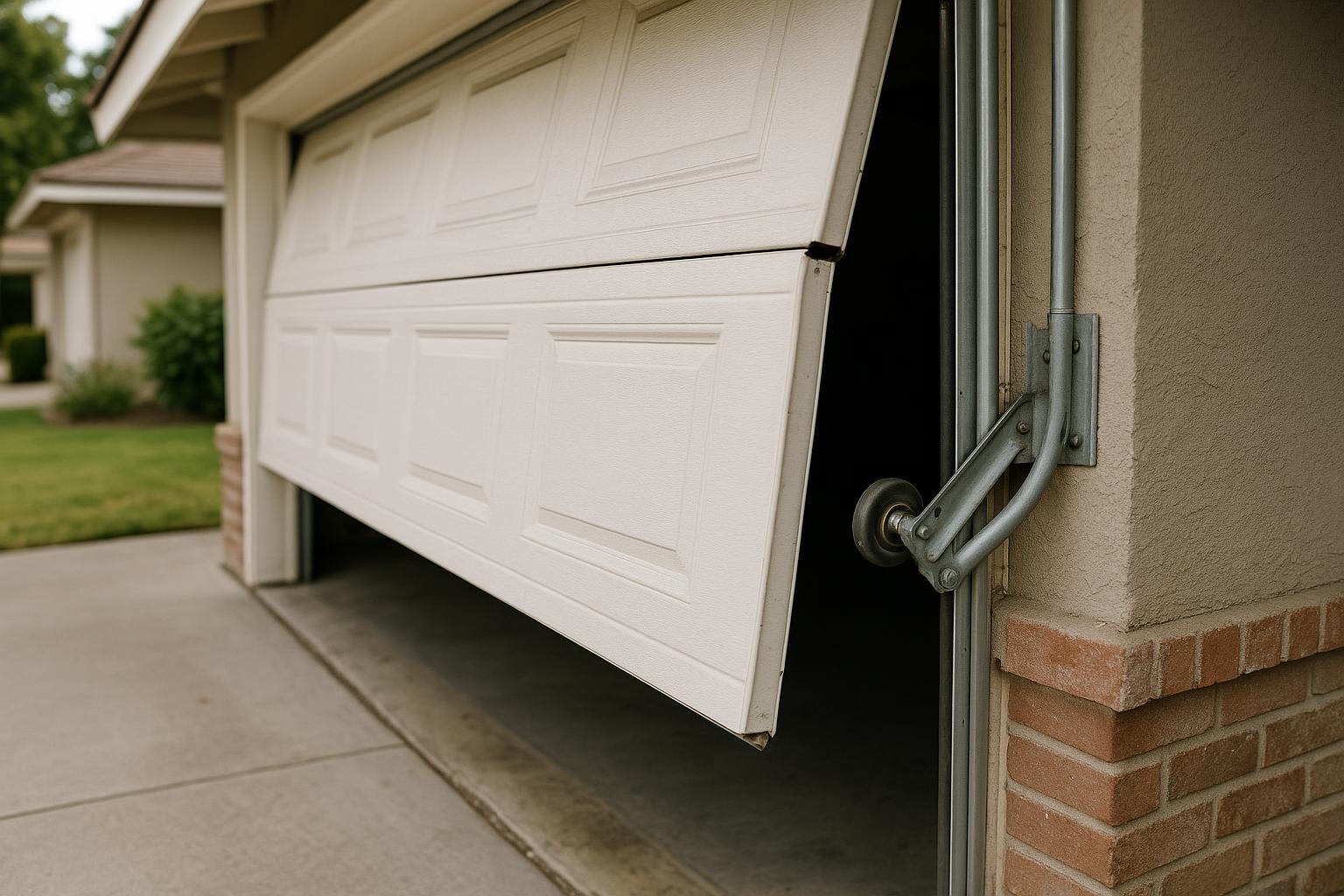
When Your Garage Door Jumps the Tracks
You press the button on your garage door opener and something doesn't look right. The door moves unevenly, makes a grinding sound, or stops partway up. Maybe one side hangs lower than the other, or you can see a gap between the door and the metal track. If any of this sounds familiar, your garage door may have come off its track — and it's a problem that demands immediate attention.
An off-track garage door is one of the most common service calls we handle at Precision Garage Door of Sacramento. It can happen to any garage door, whether it's brand new or decades old. The good news is that the warning signs are usually easy to spot if you know what to look for. The important thing is knowing what to do — and what not to do — when it happens.
What Does "Off Track" Actually Mean?
Your garage door operates on a system of vertical and horizontal metal tracks mounted on either side of the door opening. Small wheels called rollers are attached to the door panels and ride inside these tracks, guiding the door smoothly up and down as it opens and closes.
When a garage door goes off track, one or more of those rollers have slipped out of the track. This causes the door to move unevenly, bind up, or stop working altogether. In severe cases, the door can hang at a dangerous angle, held up only by the cables and springs — which are under extreme tension.
Warning Signs Your Garage Door Is Off Track
Sometimes a garage door comes off its tracks suddenly, but more often there are warning signs that build up over time. Here's what to watch for:
- Uneven movement: One side of the door moves faster or higher than the other when opening or closing.
- Visible gaps: You can see space between the rollers and the track, or the door panels and the track frame.
- Grinding or scraping sounds: Metal-on-metal noises that are different from the typical hum of the opener.
- The door gets stuck: The door stops partway up or down and won't move in either direction.
- Crooked or tilted door: The door hangs at an angle when it's partially open or even when fully closed.
- Rubbing marks: Scuff marks or scratches on the tracks, door panels, or surrounding wall and frame.
If you notice any of these signs, stop using the door immediately. Continuing to operate a garage door that's off track can cause further damage to the door, the opener, and the track system — and it creates a serious safety risk.
Common Causes of an Off-Track Garage Door
Understanding why garage doors come off track can help you prevent the problem in the future. Here are the most frequent causes we see in Sacramento homes:
Impact Damage
This is the number one cause. Backing a car into a partially closed garage door — even at low speed — can knock the bottom panels out of alignment and force the rollers out of the tracks. It happens more often than people like to admit.
Worn or Broken Rollers
Garage door rollers wear out over time. Nylon rollers can crack, and steel rollers can lose their bearings. When a roller fails, the door panel it supports can slip out of the track. Sacramento's hot summers can accelerate wear on plastic and nylon components.
Track Misalignment
The tracks themselves can shift over time due to vibration, loose mounting brackets, or settling of the garage structure. Even a small misalignment can cause rollers to pop out, especially at the curved section where the vertical track transitions to the horizontal track.
Broken Cables
The lift cables on either side of the door work with the springs to raise and lower the door evenly. If one cable snaps or slips off its drum, the door loses balance and one side can drop suddenly, pulling the rollers out of the track on the opposite side.
Obstructions in the Track
Debris, dirt buildup, or even a small object lodged in the track can block a roller and force it out of its channel. Regular cleaning of your tracks can help prevent this.
What to Do If Your Garage Door Is Off Track
Here's the most important advice we can give: do not try to fix an off-track garage door yourself. We understand the temptation — it might look like you just need to push a roller back into the track. But a garage door typically weighs between 150 and 400 pounds, and the springs and cables holding it are under tremendous tension. One wrong move can cause the door to come crashing down or a spring to release violently.
Instead, follow these steps:
- Stop using the door. Don't press the opener button again, and don't try to move the door manually.
- Disconnect the opener. If you can safely reach the emergency release cord (the red handle hanging from the opener rail), pull it to disconnect the opener from the door. This prevents the opener from trying to move the door and causing more damage.
- Secure the area. Keep children, pets, and vehicles away from the door. If the door is partially open and looks unstable, don't walk or drive under it.
- Call a professional. Contact a qualified garage door technician who can safely assess and repair the problem.
What a Professional Repair Looks Like
When our technicians at Precision Garage Door arrive at a Sacramento home for an off-track repair, here's what the process typically involves:
- Safety assessment: We evaluate the door's position and the condition of the springs, cables, and tracks before touching anything.
- Securing the door: We use clamps and locking pliers to stabilize the door so it can't move unexpectedly.
- Realigning the rollers: We carefully guide the rollers back into the tracks, adjusting the track alignment as needed.
- Inspecting for damage: We check for bent tracks, broken rollers, damaged panels, and cable issues. Often, the off-track problem is a symptom of another underlying issue.
- Testing: Once everything is back in place, we run the door through several full cycles to make sure it operates smoothly and safely.
In many cases, the repair can be completed in a single visit. If panels are bent or tracks are severely damaged, replacement parts may be needed — but we'll always explain your options and costs before doing any additional work.
Preventing Future Off-Track Problems
A little preventive care goes a long way toward keeping your garage door on track — literally. Here are some tips:
- Schedule annual maintenance. A professional tune-up includes roller inspection, track alignment checks, and lubrication of all moving parts.
- Inspect your rollers. Look for cracked, chipped, or worn rollers every few months. Replacing them before they fail is far cheaper than repairing an off-track door.
- Keep tracks clean. Wipe down the inside of the tracks periodically to remove dirt and debris. Avoid using heavy grease on the tracks — a light silicone spray is all you need.
- Check track brackets. Make sure the brackets that hold the tracks to the wall are tight. Vibration from daily use can loosen them over time.
- Be cautious when backing out. Always make sure the garage door is fully open before moving your vehicle. It sounds obvious, but it's the most common cause of off-track doors.
Don't Wait on an Off-Track Garage Door
An off-track garage door isn't just an inconvenience — it's a safety issue that can get worse quickly. The longer you wait, the more likely you are to face additional damage to your door panels, tracks, opener, or even your vehicle.
If you're in Sacramento, Elk Grove, Roseville, Folsom, or anywhere in the surrounding area and your garage door isn't moving the way it should, give Precision Garage Door a call. We'll show up on time, diagnose the problem, and get your door back on track — safely and affordably.