
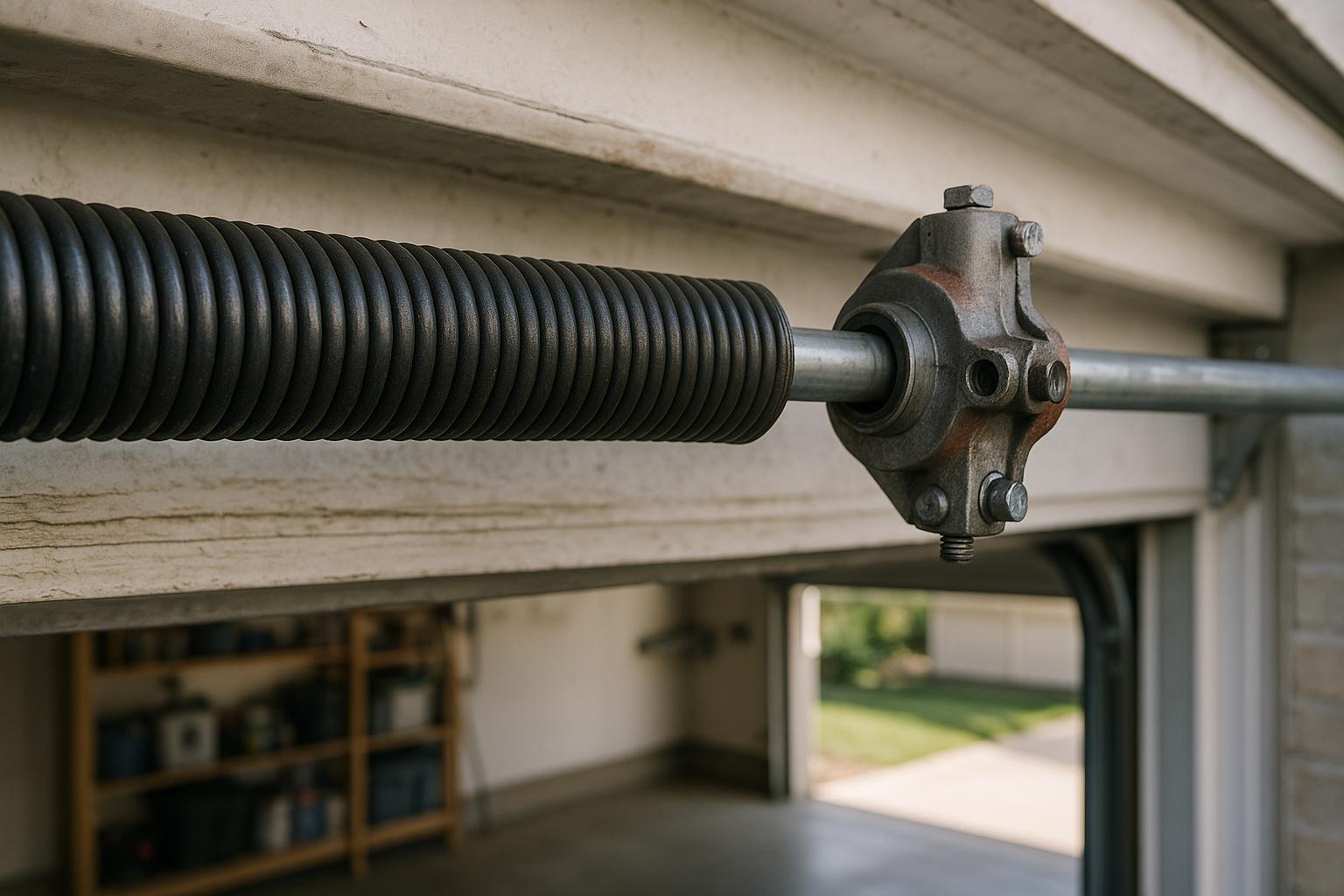
Your Garage Door Springs Are Working Harder Than You Think
Every time you open or close your garage door, the springs do the heavy lifting — literally. A standard two-car garage door can weigh between 150 and 250 pounds, and your springs are responsible for counterbalancing all of that weight. Over months and years, that repeated stress takes a toll.
If you're a homeowner in Sacramento, you've probably never given your garage door springs much thought. Most people don't — until the day they snap. And when they do, your garage door becomes inoperable, potentially trapping your car inside or leaving your home unsecured.
Understanding how long garage door springs last, what affects their lifespan, and how to spot the warning signs can save you from an unexpected — and sometimes dangerous — failure.
How Long Do Garage Door Springs Typically Last?
Most standard garage door springs are rated for approximately 10,000 cycles. One cycle equals one full open and one full close. If your household opens and closes the garage door four times a day, that works out to roughly seven to nine years of use before the springs reach the end of their expected life.
However, that number can vary significantly depending on several factors:
- Quality of the springs: Budget springs may be rated for fewer cycles, while high-cycle springs can last 20,000 to 50,000 cycles or more.
- Proper installation: Springs that are incorrectly sized or improperly installed wear out faster and can fail prematurely.
- Maintenance: Springs that are regularly lubricated and inspected tend to outlast neglected ones.
- Frequency of use: Families that use the garage as a primary entrance may cycle the door six to eight times per day, cutting the spring's lifespan significantly.
How Sacramento's Climate Affects Your Springs
Sacramento's climate plays a role in how your garage door springs age. Our hot, dry summers — where temperatures regularly exceed 100°F — cause metal to expand. In winter, temperatures can dip into the 30s overnight, causing the metal to contract. This repeated expansion and contraction cycle accelerates metal fatigue over time.
Additionally, Sacramento's temperature swings between day and night can be dramatic, especially in spring and fall. These fluctuations put extra stress on the coils, particularly if the springs haven't been properly lubricated to reduce friction.
Homes in areas like Elk Grove, Folsom, and Rancho Cordova experience these same conditions. If your garage isn't insulated, the temperature swings inside the garage can be even more extreme, further shortening spring life.
Torsion Springs vs. Extension Springs: What's the Difference?
There are two main types of garage door springs, and each has different characteristics when it comes to longevity and safety.
Torsion Springs
Torsion springs are mounted on a metal shaft above the garage door opening. They use torque to lift the door and are the more common type found in modern garage door systems. Torsion springs tend to last longer, operate more smoothly, and are generally considered safer because they're contained on the shaft when they break.
Extension Springs
Extension springs run along the horizontal tracks on either side of the door. They stretch and contract to provide lifting force. Extension springs are more common in older homes and lighter doors. When they break, they can snap violently, which is why safety cables should always be installed alongside them.
If your Sacramento home still has extension springs, it may be worth considering an upgrade to torsion springs during your next service visit. The investment often pays for itself in durability and safety.
Warning Signs Your Garage Door Springs Are Failing
Springs rarely fail without giving some warning. Here are the signs every homeowner should know:
- The door feels heavier than usual: If your garage door is difficult to lift manually, the springs may be losing tension.
- The door opens unevenly: One side rising faster than the other can indicate a weakened or broken spring on one side.
- Visible gaps in the spring coils: A torsion spring that's stretched or shows a visible gap has likely broken.
- Loud bang from the garage: A sudden, loud noise — like a firecracker — often means a spring has snapped. Many Sacramento homeowners report hearing this sound and initially thinking something fell in the garage.
- The opener struggles or won't lift the door: Your garage door opener is designed to move the door, not lift its full weight. If the springs are failing, the opener has to work much harder, which can burn out the motor.
- The door slams shut quickly: Without proper spring tension, the door can close much faster than normal, creating a serious safety hazard.
Can You Replace Garage Door Springs Yourself?
This is one of the most common questions we get, and the answer is straightforward: we strongly advise against it. Garage door springs are under enormous tension. A torsion spring that releases unexpectedly can cause severe injury or even death.
Professional technicians have the tools, training, and experience to replace springs safely. At Precision Garage Door of Sacramento, our technicians handle spring replacements every day. We use properly rated springs, ensure they're correctly wound and balanced, and test the entire system before we leave.
Attempting a DIY spring replacement to save money can result in injury, property damage, or an improperly balanced door that wears out other components prematurely.
How to Extend the Life of Your Garage Door Springs
While springs will eventually wear out no matter what, there are steps you can take to maximize their lifespan:
- Lubricate the springs twice a year: Use a silicone-based or white lithium grease spray on the coils. This reduces friction and helps prevent rust. Sacramento's dry climate makes this especially important.
- Schedule annual maintenance: A professional inspection can catch early signs of wear, check spring balance, and address small issues before they become big problems.
- Upgrade to high-cycle springs: If you're replacing springs, consider investing in high-cycle options rated for 25,000 or even 50,000 cycles. The upfront cost is higher, but you may never need to replace them again.
- Keep the door balanced: An unbalanced door puts uneven stress on the springs. You can test this by disconnecting the opener and manually lifting the door halfway. If it stays in place, it's balanced. If it falls or rises, the springs need adjustment.
- Minimize unnecessary cycles: Every open and close counts. If household members frequently open the door without needing to, those extra cycles add up over the years.
When It's Time, Call the Professionals
If your garage door springs are showing signs of wear — or if they've already broken — don't wait. A garage door without functioning springs is both an inconvenience and a safety risk. Whether you're in Sacramento, Citrus Heights, Roseville, or anywhere else in the region, Precision Garage Door of Sacramento is here to help.
We show up on time, explain exactly what needs to be done, and get your garage door working safely again. If you're unsure about the condition of your springs, give us a call and schedule an inspection. It's one of the simplest things you can do to protect your home and your family.